RESISTING OPTIMISATION
OSLO, 2026
RESISTING OPTIMISATION is a series of sculptural drawings exploring how AI-integrated platforms shape subjectivity in digital cultures. The project combines artistic research with critical design, looking at how AI-integrated platforms sort, filter, and rank individuals. These systems impact contemporary cultures and disproportionately affect marginalised groups, since their needs were not considered when large language models (LLMs) were built. The project acts as a visual prompt to invite audiences to question how these systems shape contemporary subjectivity and perceived realities through subtle nudging and market-driven pressures.
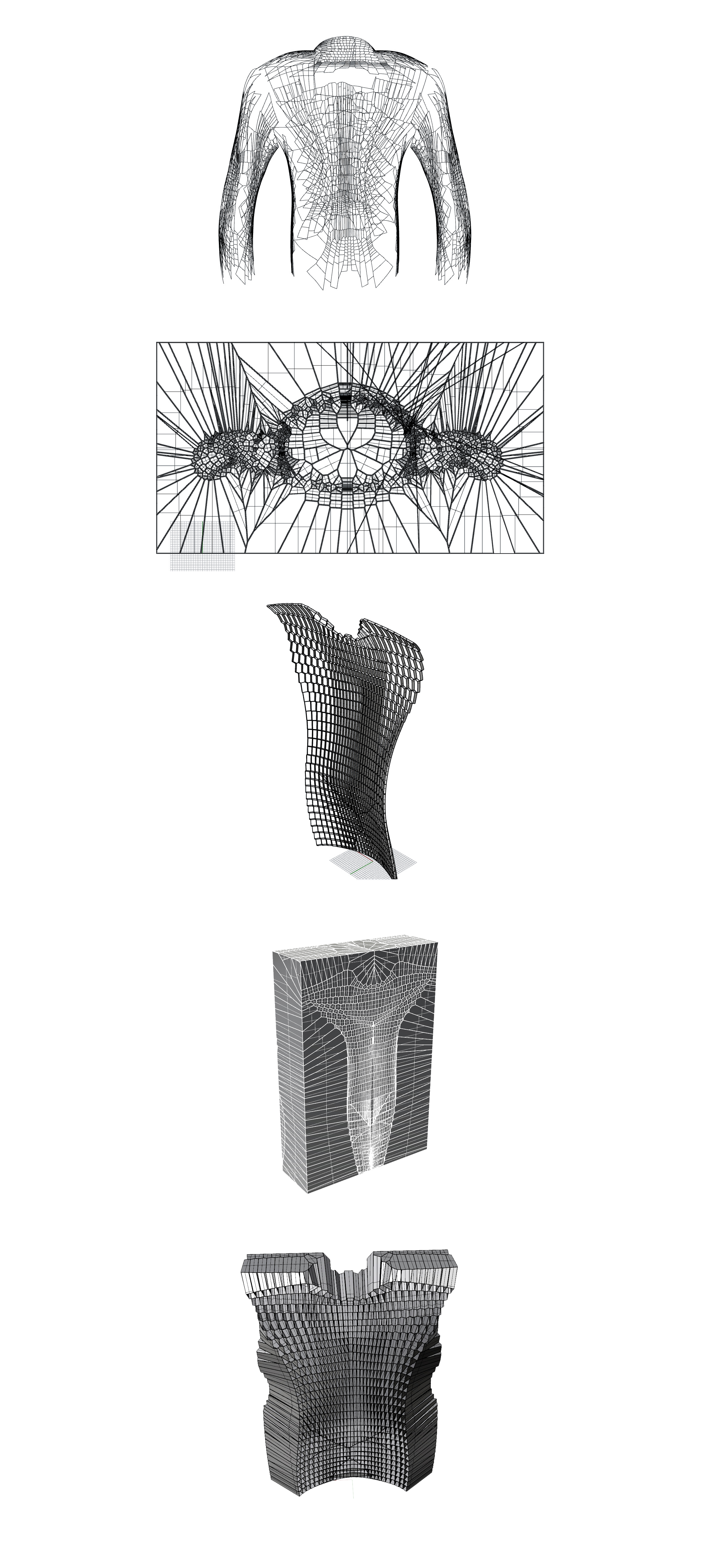
The project develops an abstracted aesthetic language that visualises the vectors in AI LLMs, currently in their trillions (2026 ChatGPT era 5.5), through a bespoke computational modelling workflow. This workflow is then plugged into a modelled jacket, creating body-derived geometry that is then manually fine-tuned with parametric nodes and constrained within a volume. The drawings are made through a combination of an X-Y drawing machine and a (human) hand.
This process layers oil paint on bright-annealed stainless steel, with the reflective surface mirroring the viewer, placing the observer’s body inside the visualised AI LLM. The desaturated metallic colours suggest the cold, hard quality of a machine that measures, sorts and ranks the soft warmth of human complexity. The project contributes to dialogue between artists, technologists and the public on what it might mean to develop tools that allow platform users to navigate, interrupt – or maybe even resist – the gamified logic of algorithmic optimisation, engaging with platform cultures with greater agency and authenticity.
Keywords - Human-centred AI, Queer Machines, Algorithmic transparency, AI Infrastructures, Platform Economies, Algorithmic Bias, Digital Subjectivities, Human–Machine Collaboration, Speculative Design, Critical AI
The project develops an abstracted aesthetic language that visualises the vectors in AI LLMs, currently in their trillions (2026 ChatGPT era 5.5), through a bespoke computational modelling workflow. This workflow is then plugged into a modelled jacket, creating body-derived geometry that is then manually fine-tuned with parametric nodes and constrained within a volume. The drawings are made through a combination of an X-Y drawing machine and a (human) hand.
This process layers oil paint on bright-annealed stainless steel, with the reflective surface mirroring the viewer, placing the observer’s body inside the visualised AI LLM. The desaturated metallic colours suggest the cold, hard quality of a machine that measures, sorts and ranks the soft warmth of human complexity. The project contributes to dialogue between artists, technologists and the public on what it might mean to develop tools that allow platform users to navigate, interrupt – or maybe even resist – the gamified logic of algorithmic optimisation, engaging with platform cultures with greater agency and authenticity.
Keywords - Human-centred AI, Queer Machines, Algorithmic transparency, AI Infrastructures, Platform Economies, Algorithmic Bias, Digital Subjectivities, Human–Machine Collaboration, Speculative Design, Critical AI


Machine and hand-drawn oil paint on Stainless Steel, 16 Tiles
124 x 174cm, Oslo 2026
Installation Photo, Jon Gorospe/SKOG

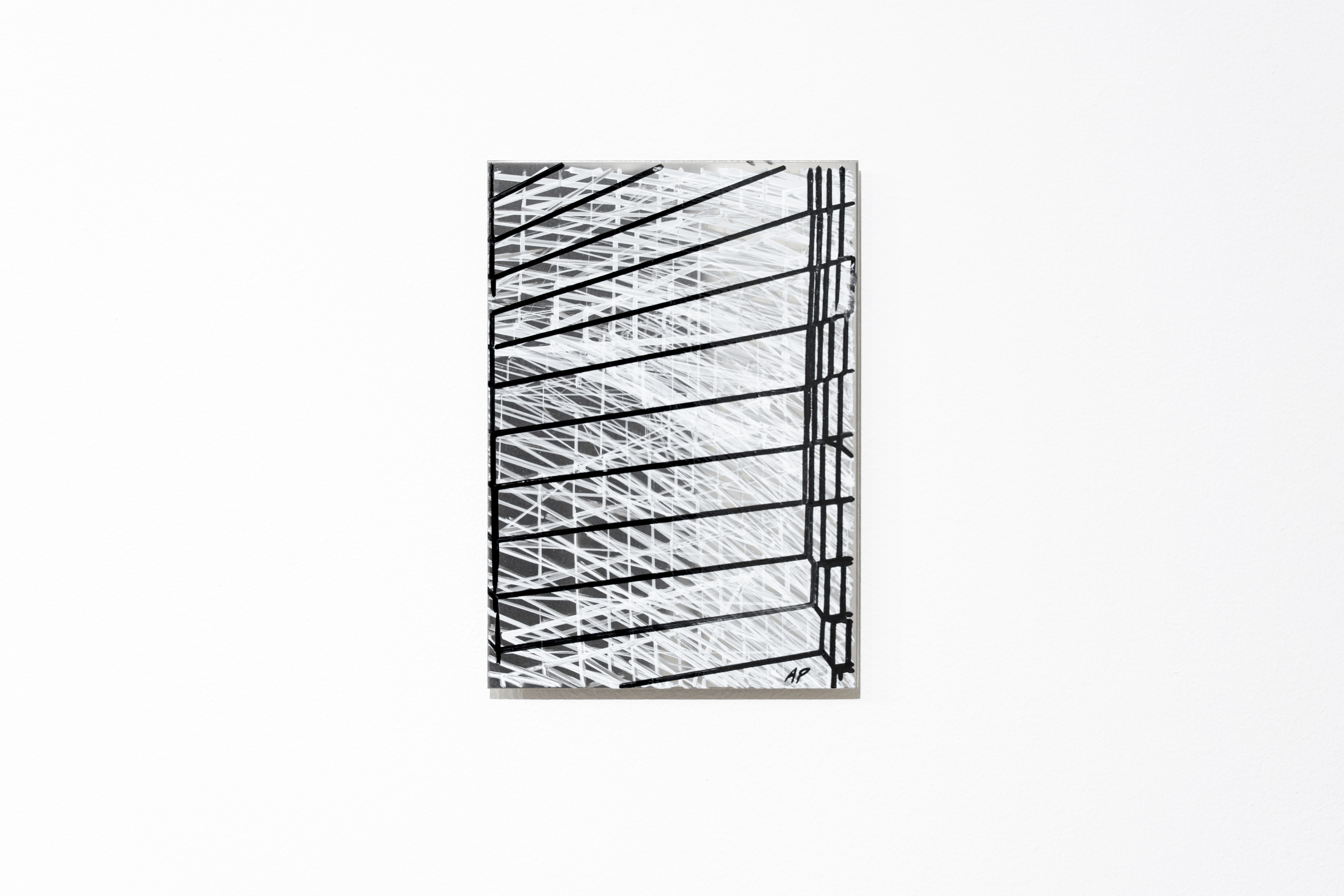
Resisting Optimisation 02–1
Machine and hand-drawn oil paint on Stainless Steel
14.8 x 21 cm, Oslo 2026
Installation Photo, Jon Gorospe/SKOG
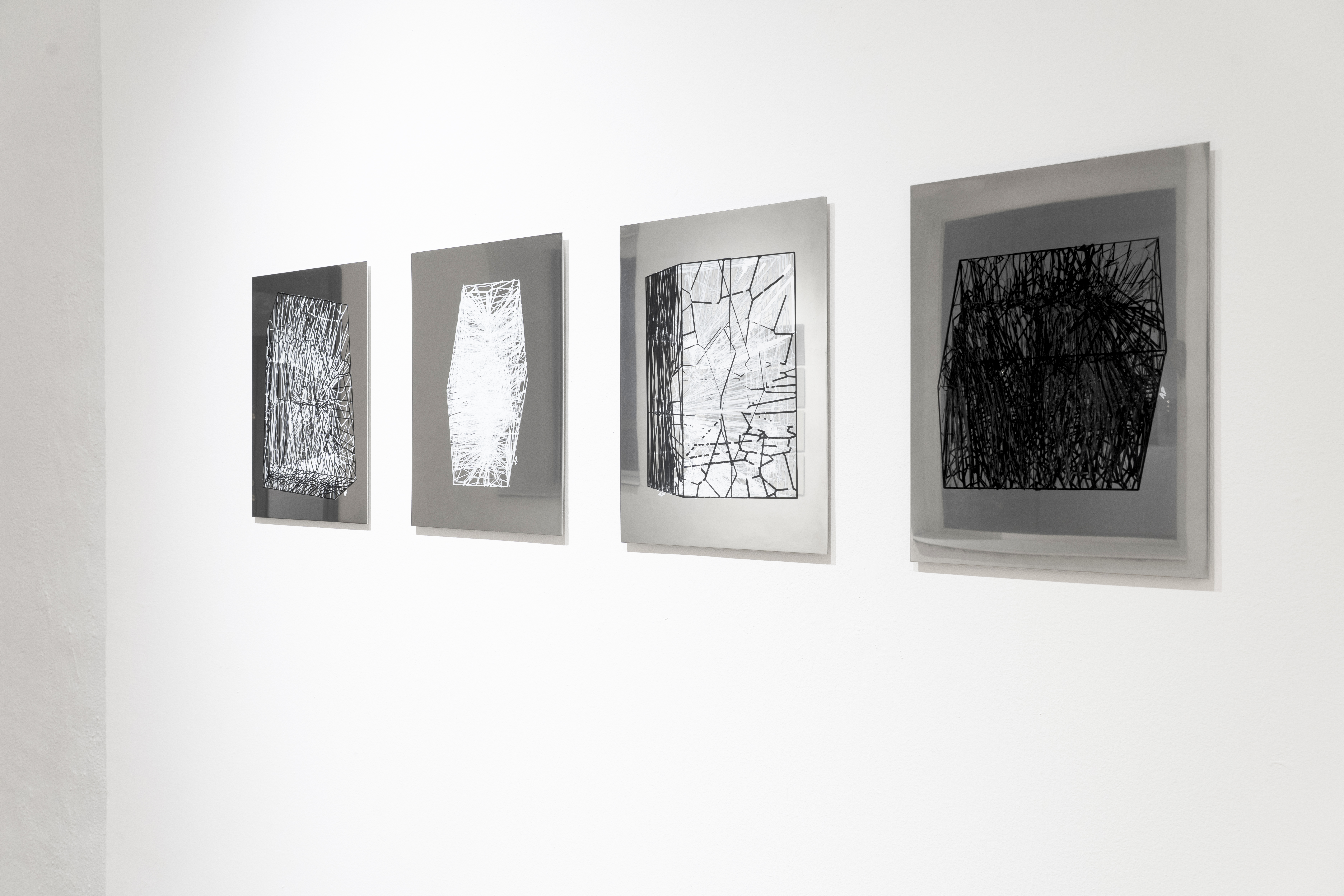
Resisting Optimisation 00-7, 00-1, 00-2, 00-5
Machine and hand-drawn oil paint on Stainless Steel
29.7 × 42cm each, Oslo 2026
Installation Photo, Jon Gorospe/SKOG


Resisting Optimisation 00-3, 00-6, 00-2, 00-7, 00-1
Machine and hand-drawn oil paint on Stainless Steel
(00-7, 00-1, 00-2, 00-5) 29.7 × 42cm each
(00-3) 16 tiles, 124 x 174cm
Oslo 2026
Installation Photo, Jon Gorospe/SKOG


Resisting Optimisation 00–10
Machine and hand-drawn oil paint on Stainless Steel, 16 Tiles
88 x 64 cm, Oslo 2026
Installation Photo, Jon Gorospe/SKOG

RESISTING OPTIMISATION
WORKFLOW EXPERIMENTS


SKOG in conversation with Adam Peacock (1:38mins)
Discussing AI-integrated automation of filtering mechanisms in platform cultures, and parametric scripting existing behind RESISTING OPTIMISATION
Video, Ida Kathrine Hansen/SKOG
Discussing AI-integrated automation of filtering mechanisms in platform cultures, and parametric scripting existing behind RESISTING OPTIMISATION
Video, Ida Kathrine Hansen/SKOG
RESISTING OPTIMISATION
Component of series of designed PhD experiments, Tools for navigating AI-integrated subjectivity.
Further research resources can be found here
Artist, researcher and project lead, Adam Peacock
Curatorial collaboration, Brian Noguera, Kim Gabrielli, Ida Kathrine Hansen
Exhibition partner, SKOG Art Space Oslo
Project research supervision, Dr Emily Rosamond and Dr Scott Wark, Visual Cultures, Goldsmiths, University of London
Curatorial collaboration, Brian Noguera, Kim Gabrielli, Ida Kathrine Hansen
Exhibition partner, SKOG Art Space Oslo
Project research supervision, Dr Emily Rosamond and Dr Scott Wark, Visual Cultures, Goldsmiths, University of London
Support received from, UK Economic and Social Research Council ESRC; South and East Network for Social Sciences SENSS; Visual Cultures, Goldsmiths, University of London; Department of Computing, Goldsmiths, University of London
SELECTED PROJECT ENGAGEMENT
2026, [Full exhibition], Exhibited at SKOG Art Space, Oslo
2026, [RESISTING OPTIMISATION 00-11], Exhibited at BLEUR Gallery, London
2026, [RESISTING OPTIMISATION 00-11], Exhibited at BLEUR Gallery, London